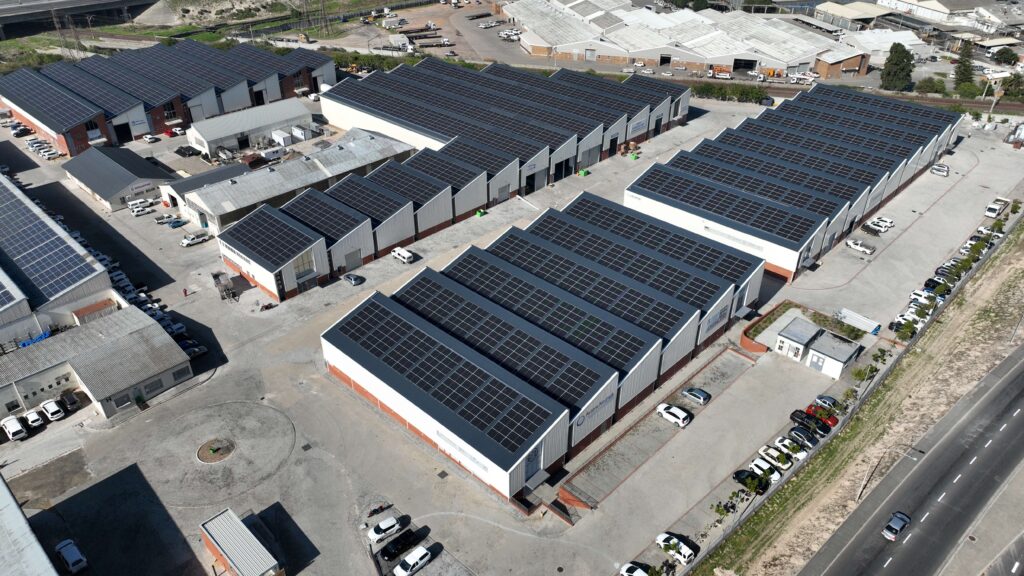
In March 2026, oil prices surged past $100 per barrel as geopolitical conflict shut down 20% of global crude supply. While fossil fuels power the modern world, they are also a major bottleneck to energy security. Two forces are now converging on the same conclusion: geopolitical instability and accelerating climate risk are exposing global economies to severe fossil fuel price shocks. Both forces point to the same answer: renewable energy needs to be deployed at speed to stabilise the global energy market.
Solar is already the cheapest source of electricity for the majority of the world’s population (IRENA 2024). The question is no longer whether to deploy it at scale. The question is how fast engineering capacity can match the pace that both the market and the planet now demand.
The price of fossil dependence
Countries that rely on imported fossil fuels for electricity carry a structural vulnerability. The price of their energy is set by events they cannot influence or accurately anticipate. The ongoing Iran conflict made this visible within hours. Oil prices surged more than 25% and the closure of the Strait of Hormuz disrupted a fifth of global oil supply. The disruption has been described as the largest in the history of the global oil market (Bloomberg, 2026).
This is not a new lesson. The energy shock that followed Russia’s invasion of Ukraine in 2022 cost European economies an estimated US$1.8 trillion over three years.
Alongside the geopolitical exposure sits the physical and financial cost of climate change itself. Without accelerated decarbonisation, global GDP losses from unchecked warming could reach 18% by 2050. By the end of the century, the hit to global per capita income could approach 25%. Both figures come from global financial institutions stress-testing the world economy across climate scenarios.
“This is the clearest possible demonstration of why energy security and solar deployment are the same conversation,” says Paul Nel, CEO of 7SecondSolar, the solar engineering studio behind AutoPV™. “Every megawatt of utility-scale solar that gets built reduces a country’s exposure to price shocks that originate in conflicts they have nothing to do with. The solar resource is domestic. It cannot be weaponised. And the economics are clear as daylight.”
The economics of solar are not a forecast
The global weighted average cost of generating electricity from utility-scale solar has fallen 90% since 2010, reaching US$0.043/kWh in 2024. Solar is now 41% cheaper than the least-cost fossil fuel alternative. In 2024, 91% of all newly commissioned utility-scale renewable capacity delivered electricity below the cost of the cheapest new fossil fuel option available.
In 2010, utility-scale solar cost more than four times the fossil fuel average. Within 15 years, the ratio inverted entirely. In 2025, global clean energy investment reached US$2.3 trillion, outpacing fossil fuel supply investment for the second consecutive year.
Technology must address the main constraint in solar deployment
The world installed 647 gigawatts of new solar capacity in 2025, up from 452 gigawatts in 2024, with solar accounting for roughly four in every five gigawatts of new renewable energy added globally. The constraint on solar deployment is no longer economic. For developers, EPCs and IPPs operating under tightening project timelines and financing conditions, the constraint is engineering throughput.
“The speed of global solar deployment now demands engineering tools that can match it. The difference between a design optimised across multiple configurations and one built from a single best estimate can run to millions in CAPEX savings and years of additional yield over a project’s lifetime,” adds Nel. “Design automation tools like AutoPV can generate multiple construction-ready design iterations in minutes, each with full LCOE (levelised cost of energy) analysis. Engineers need that comparative visibility to make fast, confident decisions. That is what closes the gap between deployment ambition and projects that actually get built and financed.”
For the developers, asset owners and engineering teams positioning themselves in this market, the question is no longer whether to build utility-scale solar at scale. The question is how quickly the engineering layer can match the pace the world now demands of it. “Every gigawatt of utility-scale solar commissioned is a permanent reduction in a country’s exposure to the next conflict, the next supply disruption, and the next decade of compounding climate costs,” adds Nel.