While solar and battery technology now make renewable power in Africa financially attractive on paper, local investors are not realising expected returns on mid-scale solar projects. Experts say the consistent underperformance is being driven by copy-paste assumptions imported from the US and Europe, as well as insufficient local material engineering skills, which industry experts say are reaching worrying levels.
Frederik Theron, COO of Sustain Group highlighted the growing challenge at the second African Root Cause Analysis (RCA) annual conference held recently in Stellenbosch.
According to Theron, Africa’s rapidly expanding solar market is emerging as one of the most dynamic in the world. He qualified this saying, Africa accounts for only about 2% of installed global renewable capacity, but an estimated 50–60% of current growth.
Growth thwarted by financial underperformance
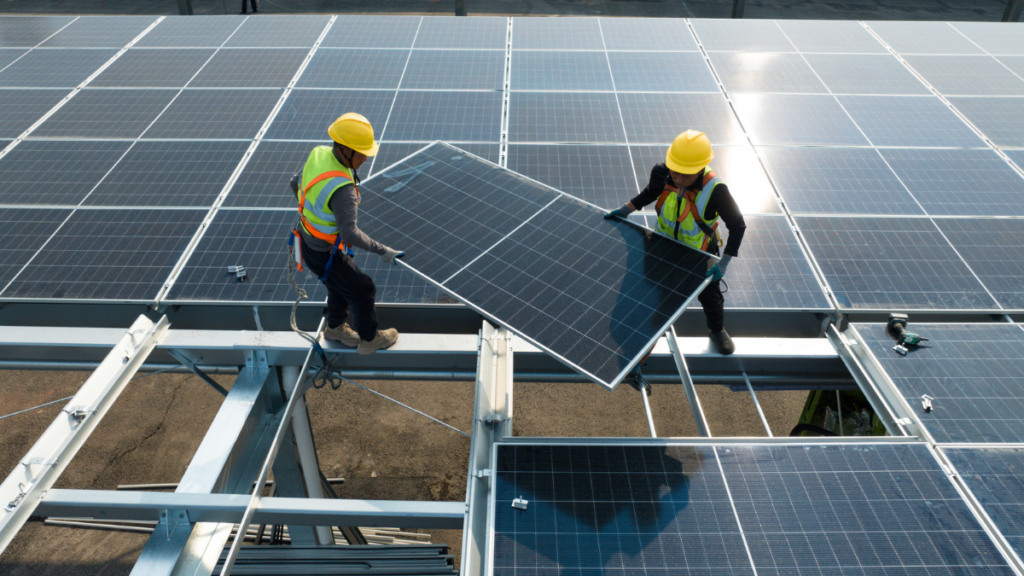
However, while falling technology costs of dispatchable solar (solar coupled with storage). may have opened a clear economic window, Theron warned many plants are underperforming financially.
According to Theron, investors modelling returns of 8 to 15% on mid-scale projects are in practice often seeing only 5 to 8%.
High temperatures are a particular challenge. “Solar panels hate temperatures over 35 degrees and overall system efficiency drops beyond that point. While batteries may deliver strong performance in the short term, they degrade faster in sustained heat,” Theron explained, adding that heat could account for anything between 1 and 7% additional annual loss on top of normal system degradation.
Theron argued that a key problem is the way global standards and commoditised equipment are being applied. “The engineering best practices at the moment are inherited from Europe and the United States, and a lot of those assumptions from the developed world get baked into our financial models. As engineers, we’ve engineered ourselves out of the value chain,” he explained, adding that this was a significant challenge for root cause analysts and materials engineering in general.
Theron told conference delegates that if Africa is to truly cash in on its renewables moment, risk intelligence has to move upstream into the earliest stages of project design and investment, built explicitly around African conditions rather than imported models.
Skills crisis is adding to the African growth challenge
Speakers at the conference repeatedly pointed to evidence that the shortage of materials engineers across the African continent is real and worsening.
Lucien Matthews, Executive Beneficiation at Tharisa honed in on the challenge telling delegates that an International Labour Organization2024 report confirms a continent‑wide engineering shortfall, linking it to substandard work and rising project costs across the construction value chain. According to Matthews, the skills pipeline has failed to keep up with the scale and longevity of new infrastructure and mining projects.
Matthews said while South Africa engineering qualification completion rates may have improved over the last few years, overall output has remained largely stagnant, when a step‑change is what is needed. He added that in materials engineering specifically, official graduation statistics effectively disappeared after 2009, and that numbers are now so low they can no longer be tracked as a distinct category.
He linked the shortage to weak schooling and under‑resourced universities, compounded by a growing brain drain and the migration of engineers into management and IT. “Our skilled engineers are highly sought after in many countries, and they move after the opportunities. There’s also a migration for people out of their pure field of expertise into management, and I stand here as an example of that,” he admitted.
Major consequences coming down the line
Matthews warned that the consequences of the skills shortages are already being felt in the performance of long‑life assets.
“More than project delays, there are increased costs, and compromised quality. Major projects are either failing or suffering major time delays,” he said, arguing that the shortage of specialists in material selection, testing, welding and failure analysis is directly increasing the risk of premature cracking, corrosion and breakdowns.
Conference founding chair and materials engineer, Dr Janet Cotton, who is also the founder and CEO at One Eighty Materials Engineering Solutions, contrasted Africa’s fragile capacity with the United States.
“In the United States there are around 3 000 firms offering material engineering consulting, many built around postgraduate‑level expertise and serving insurers, loss adjusters, lawyers and major project developers. Africa has infrastructure ambitions on a similar scale, but nowhere near this depth of specialised capacity,” she shared.
Building robust ecosystems is a preventive imperative
Matthews and Cotton agreed that unless South Africa and its neighbours rebuild a focused pipeline of materials engineers (through targeted university programmes, industry partnerships and professional registration), the continent’s big projects will continue to carry a hidden, and growing, risk burden.
The importance of having qualified local professionals to carry out proper root cause analysis was also a common theme.
“Root cause analysis is often seen as something that happens after failure, but the real power of root cause analysis lies in preventing failure in the first place. This conference exists to explore how engineering decisions, materials, engineering, legal insight and insurance strategy can work together to mitigate the risks of rapid industrialisation across Africa,” said Antonio Massella, Conference Director, and disaster and risk management consultant at One Eighty Materials Engineering Solutions.
Alderman James Vos, City of Cape Town’s Mayoral Committee Member for Economic Growth, who opened the conference summed up saying: “It was fascinating reading about the specialised work being done in materials engineering, especially how testing, analysis and consulting helps industries understand failures and also prevent those risks in major projects. And so bringing this ecosystem together to share knowledge is extremely valuable.”