From port cranes to offshore rigs, advanced lubrication and maintenance strategies are essential to unlocking the full performance of galvanised and Galfan wire ropes. In harsh industrial environments, from South Africa’s busy ports to offshore drilling operations, zinc-coated wire ropes are widely recognised as a first line of defence against corrosion. However, while galvanizing and Galfan (zinc-aluminium) coatings provide essential protection, they represent only part of the equation.
To achieve full design life and ensure operational safety, these coatings must be supported by a rigorous maintenance and lubrication strategy. According to Simon Norton, Director of the International Zinc Association (Africa), wire rope performance depends on understanding that these systems are not static components, but dynamic mechanical assemblies.
“Zinc coatings provide critical corrosion protection, but wire ropes are constantly in motion,” explains Norton. “Without proper lubrication and maintenance, internal wear and degradation can occur even when the external coating appears intact.”
A dynamic system, not a static product
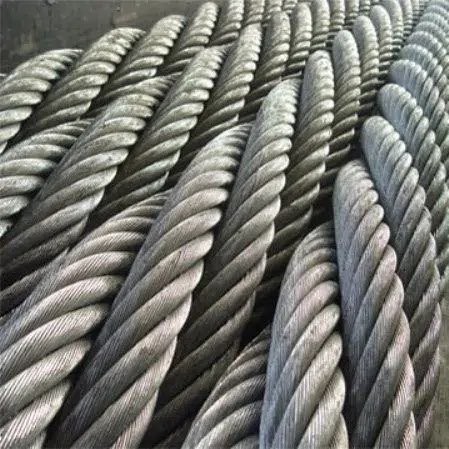
Wire ropes consist of hundreds of individual wires working together under continuous stress. As ropes pass over sheaves and wind onto drums, these wires slide against one another, generating internal friction.
While zinc coatings protect against environmental corrosion through sacrificial action, they do not eliminate mechanical wear. Without adequate lubrication, this internal movement leads to fretting corrosion, accelerated fatigue, and ultimately premature failure.
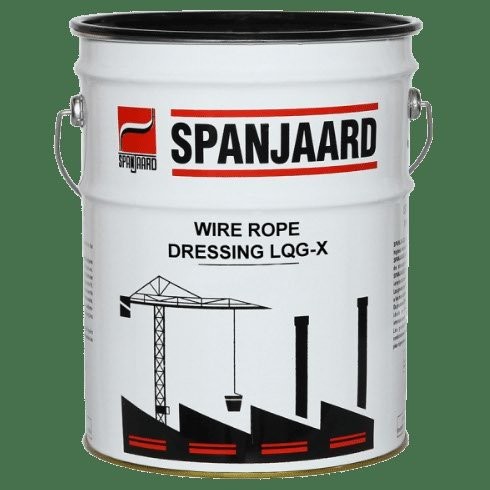
In this context, lubrication is not an optional extra, but a critical functional component. It reduces internal friction, protects against moisture ingress, and preserves both the steel core and the zinc coating itself.
Selecting the right lubricant for harsh environments
In marine and high-humidity environments, lubricant selection is particularly demanding. Products must be engineered to withstand salt spray, heavy rain, and continuous mechanical stress while maintaining performance over time.
Key performance requirements include strong adhesion to resist water washout and “fling-off” during high-speed operations, as well as the ability to penetrate deep into the rope’s core rather than simply coating the surface. Effective lubricants also incorporate corrosion inhibitors that stabilise the protective oxide layers formed on zinc and aluminium surfaces.
For offshore and shipboard applications, environmental compliance is increasingly important. Environmentally Acceptable Lubricants (EALs), which are biodegradable and low in toxicity, are often required to meet international regulatory standards without compromising load-carrying capability or corrosion protection.
Application methods reach the core
The effectiveness of lubrication depends not only on the product used, but also on how it is applied. Pressure lubrication systems are widely regarded as best practice for high-duty applications such as port cranes. These systems force lubricant into the rope under pressure while removing old grease and contaminants, ensuring that internal friction zones are properly protected.
By contrast, manual application methods, such as brushing or pouring lubricant onto the rope, often fail to penetrate to the core. If not preceded by thorough cleaning, they can also trap moisture and debris, accelerating internal corrosion rather than preventing it.
Maintenance strategies across industries
Different operating environments present distinct challenges, requiring tailored maintenance approaches. In port and harbour cranes, ropes are exposed to salt-laden air and high-frequency operating cycles.
Maintenance efforts should focus on the working sections of the rope, where repeated bending occurs. Regular cleaning is essential to prevent the build-up of abrasive mixtures formed by dust, pollutants, and grease.
Offshore drilling operations introduce additional complexity, particularly in the ‘splash zone’ where ropes are intermittently exposed to seawater. Here, lubrication must remain stable across varying temperatures and resist rapid depletion of protective coatings.
For ship derricks and civil engineering cranes, periods of inactivity can pose a different risk. If lubricants dry out or crack, moisture can become trapped against the zinc coating, leading to localised corrosion. In these cases, flexible, film-forming lubricants that remain stable over time are preferred.
Inspection means looking beyond the surface
Even with effective lubrication, regular inspection remains essential. Standards such as ISO 4309 provide guidance, but coated ropes require particular attention, as surface appearance can mask internal damage.
A consistent reduction in rope diameter may indicate internal corrosion or core degradation, while the presence of “white rust” suggests that the zinc coating is reacting to moisture and that lubrication has failed. Wire breaks occurring between strands, rather than on exposed surfaces, are a key indicator of internal fretting caused by insufficient lubrication.
Zinc coatings, whether galvanised or Galfan, provide a crucial foundation for corrosion resistance. However, their full benefits can only be realised when combined with appropriate lubrication technologies and disciplined maintenance practices.
High-performance greases
High-performance greases, including those fortified with solid lubricants such as graphite or molybdenum disulphide, help maintain protection under extreme pressure. Modern formulations also offer enhanced adhesion, water resistance, and compatibility with high-pressure lubrication systems, ensuring that protection reaches the rope’s core.
By integrating these approaches, operators can significantly extend service intervals, reduce downtime, and minimise the risk of failure in critical lifting applications. “Zinc gives wire ropes a vital headstart in resisting corrosion, but long-term performance depends on what happens in operation,” highlights Norton. “When advanced coatings are combined with the right lubrication strategy and consistent maintenance, operators can achieve far greater reliability, safety, and service life in even the harshest environments,” he concludes.