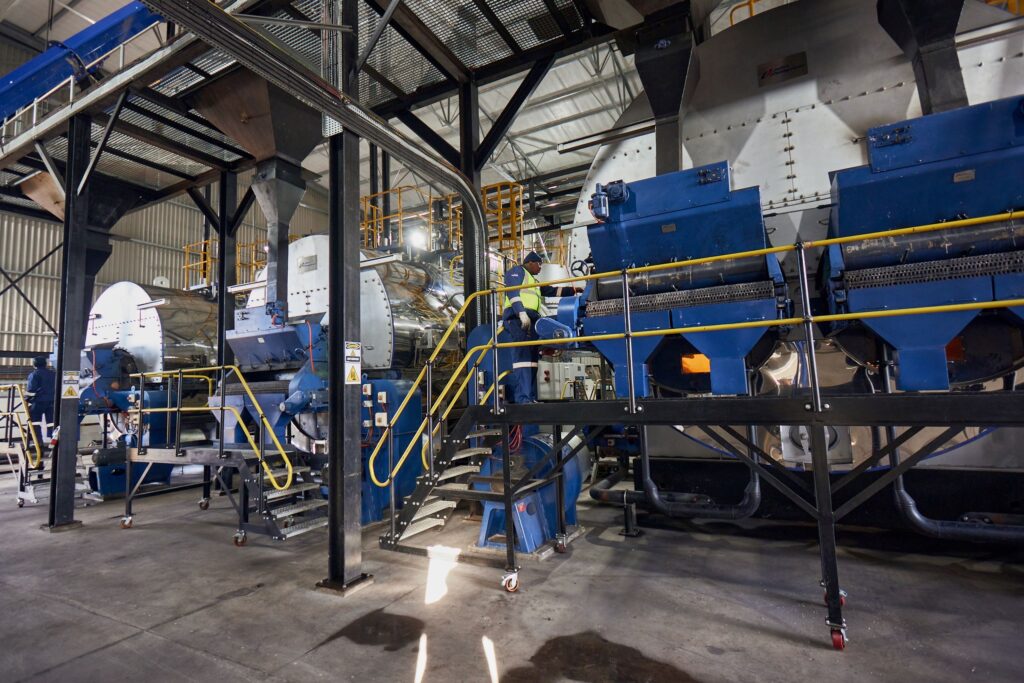
For 90% of South Africa’s manufacturers, multiple boilers are the backbone of their critical steam operations, dramatically lowering the risk of downtime, optimising energy efficiency and increasing productivity.
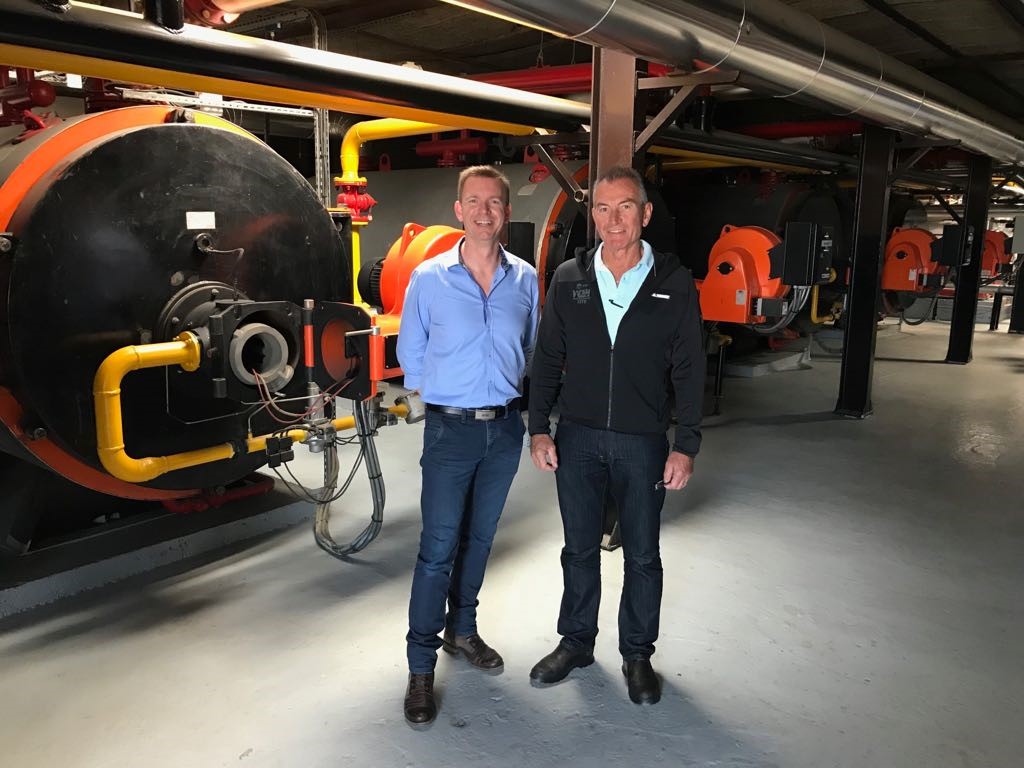
Chris Paterson, Managing Director of expert steam and boiler operations and maintenance provider Associated Energy Services (AES), says although multi-boiler systems are common, AES still encounters single-boiler operations. This is common in smaller businesses operating five-day production cycles, or which cannot expand their boiler infrastructure despite growing production demands.
“In this context, we educate clients about potentially long lead times on some pressure part repairs,” Paterson explains.
Solution for smaller facilities
A solution for smaller manufacturing facilities with lower steam demand (less than 1.5 tons) is the installation of a liquid-fuel backup boiler: “This requires less capital investment – although the operational cost is very high,” Paterson advises.
Boiler downtime falls into two broad areas: short-term interruptions – where issues can be resolved relatively quickly – and longer-term downtime associated with pressure vessel repairs and structural defects. Meanwhile, production facilities remain idle because rental or backup boilers take time and may be very costly.
Mostly, the waiting period is at least two weeks. Additional considerations include available space, fuel supply and infrastructure compatibility. There are extensive waits for refurbished replacement boilers – while new boilers can take up to 25 weeks to manufacture.
“That should really be avoided. Once you have a backup boiler, you need to manage how and when you run it, which is AES’s expert offering,” he adds.
Paterson emphasises that industries operating continuous production processes are particularly vulnerable to boiler downtime: “When you have a site that is operating 24/7/365, lost production cannot be made up. Another challenge is raw material shelf life, where processing must be done within a specific period. For example, fisheries need to process their daily catch quickly, as fish perishes fast and disposal is costly.” Dairies face similar risks and depend on uninterrupted steam to process daily milk collections from farmers.
“Another aspect is the fixed cost of running a plant. If this is high and you cannot get any throughput, that has a major impact,” Paterson warns.
When AES assesses projects, the company focuses on risk analysis and redundancy planning: “AES’s performance guarantee is linked to what assets are on site, so we commit to higher steam availability if there is redundancy in the system. We even advise companies to consider not using a single 20-ton boiler but to instead use two 10-ton boilers. If there is a failure, they do not lose the whole 20-ton capacity. They only have to bring down one boiler,” he explains.
He also dismisses the misconception that operating additional boilers results in higher costs for clients: “That is incorrect, because AES takes on the operational efficiency and financial risks. The client is buying steam. Whether it comes from one boiler or two boilers, they still pay the same steam price.”
Fuel source diversification
Diversifying fuel sources is another key strategy for spreading operational risk and strengthening steam generation resilience.
Paterson points to a dairy sector client that has successfully integrated biomass into its energy mix while maintaining alternative fuel capabilities: “This client understands that the biomass market is new – and finite – and can burn alternative fuels in different boilers. Another FMCG manufacturing plant under AES’s care can swing from biomass through to heavy fuel oil (HFO) and even coal to generate steam.”
Ideally, AES prefers to have two boilers operating online simultaneously. Where this is not feasible, the next best option is to maintain a second boiler in a hot-sparged state, where live steam can be injected directly into the offline boiler to keep it on pressure. This unit can be brought online within two hours.
However, starting a coal-fired boiler from scratch can take between 6 – 8 hours, significantly increasing production vulnerability during outages.
“Again, this is where AES can add value. When we contract to sell steam, availability is linked to this. If steam is not available, we pay penalties – which is what drives us to ensure that we have got the right capacity online,” Paterson notes.
Counting the costs
“AES has done many projects to increase boiler capacity. Nowadays, facilities have ‘wish lists’ in terms of their boiler capacity – but cannot always quantify the benefits. We see wasteful expenditure across the board. We can quantify the benefits so that our clients have an accurate understanding and measure the returns,” he explains.
To improve efficiency and avoid equipment damage, Paterson advises manufacturers to carefully schedule steam usage and develop a clear understanding of production demand patterns.
Where steam requirements fluctuate significantly, AES works closely with clients to understand production processes and ensure boiler controls are correctly configured.
“Steam fluctuations necessitate good communication. If it is a batch process and steam requirements fluctuate constantly, this impacts on boiler selection and controls. Boilers should not fight to supply steam. They must be correctly set up to ensure that one boiler is not supplying all the steam – while the other one is just idling. Typically, any turn-down ratio below 40% is risky,” he concludes.