A string of recent incidents on construction sites has drawn regulatory attention to the sector, raising the question of why major safety failures are still so common despite South Africa’s extensive construction regulations, and what will it take to stop them? We simply must do better.
The solutions might not be tougher penalties – or at least, not on their own. Greater penalties may deter deliberate non-compliance, but the industry must also confront the harder truth of why dangerous practices are being allowed to take hold on site, and whether the deeper failure lies in the sector’s safety culture itself.
We have seen just how deadly poor safety measures can become following four different building collapses between December 2025 and March 2026, killing 17 people and injuring 24. Investigations pointed to a pattern of failure across these construction sites, including inconsistent application of existing regulations, inadequate oversight, weak safety enforcement, and widespread non-compliance.
In response, the Council for the Built Environment (CBE) has recommended reviewing the penalties for developers who proceed with construction without the required approvals. It has noted that even after a full year of unauthorised operations, the fine may only amount to around R36,000 – a sum that can simply be absorbed rather than acting as a meaningful deterrent.
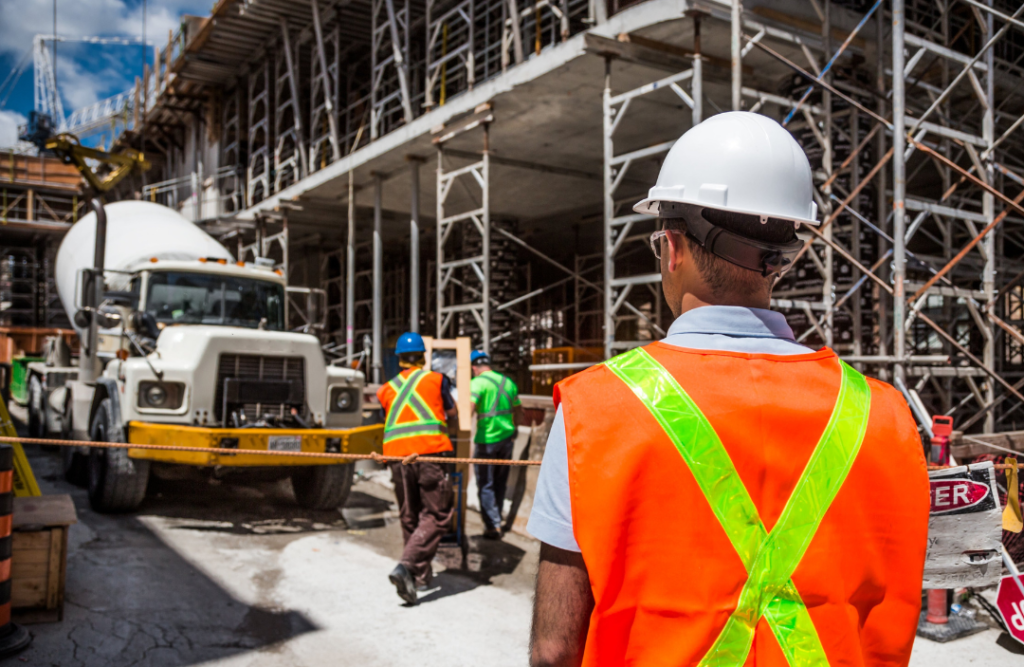
But even dramatically higher fines will not change what happens on sites by themselves. A worker operating powerful equipment, laying bricks, pouring concrete, or working high above the ground on scaffolding is not focused on the potential penalty an owner might face if something goes wrong. Their attention is firmly on doing the job at hand as to earn a living for themselves and their loved ones.
What changes behaviour is a strong safety culture where Personal Protective Equipment (PPE), established procedures, and basic precautions are treated as non-negotiable parts of how the job gets done.
The threat of fines does not change workers’ on-the-ground behaviour
Examples abroad demonstrate that higher fines have mixed results. Hong Kong, for example, has already introduced much tougher penalties to improve workplace safety. Since 2022, the most serious breaches of employers’ general safety duties have carried fines of up to HK$10 million, while those convicted may also face up to two years in prison. The fine is designed to carry real financial weight, although even at that level it may represent only a small share of a major construction company’s annual profit.
Whether such penalties translate into better safety outcomes is less clear. Construction accidents remained stable for the first few years after the fines were introduced, then fell noticeably in 2025. At the same time, however, more people were killed in 2025, as 21 workers lost their lives compared with 14 the year prior.
South Africa should take this experience as a reminder that penalties can strengthen accountability, but the real work to prevent injuries and deaths is still done on the construction site itself. Safety is shaped by what supervisors tolerate, the risks and behaviours workers see normalised every day, and whether somebody who spots a hazard is expected to speak up or keep quiet and carry on.
Critically, no worker should have to choose between raising a safety concern and being branded as difficult, accused of slowing down the job, or fearing for their livelihood. People are far more likely to report damaged equipment, unsafe scaffolding, missing protection, or dangerous shortcuts when they know the concern will be taken seriously and acted on. That’s an enabling environment which promotes a virtuous circle focused on safety.
Site leadership therefore carries enormous responsibility for setting the standard. Supervisors and contractors shape culture through what they allow to become normal. One ignored shortcut lowers the bar and makes the next one easier to justify. In contrast, halting unsafe work immediately and acting on concerns without hesitation sends a clear message about what will and will not be tolerated on site.
The industry should also pay far closer attention to the warning signs that appear before a serious incident. Near misses, repeated shortcuts, missing PPE, poor housekeeping, and work that starts drifting away from approved procedures can all expose where standards are beginning to break down. Correcting those behaviours early can stop a warning from becoming an injury or worse.
Construction safety ultimately has a much bigger human purpose. Workers deserve to return home safely after every shift, while families, businesses, and communities must be able to trust the schools, hospitals, homes, roads, and other infrastructure they depend on long after construction crews have left.
There is a clear place for penalties where people deliberately abdicate their responsibilities, both when it affects their own safety and the safety of fellow workers and the wider community. However, the industry must match those consequences with a safety culture strong enough to ensure that safe behaviour is part of how every job is done, every day.