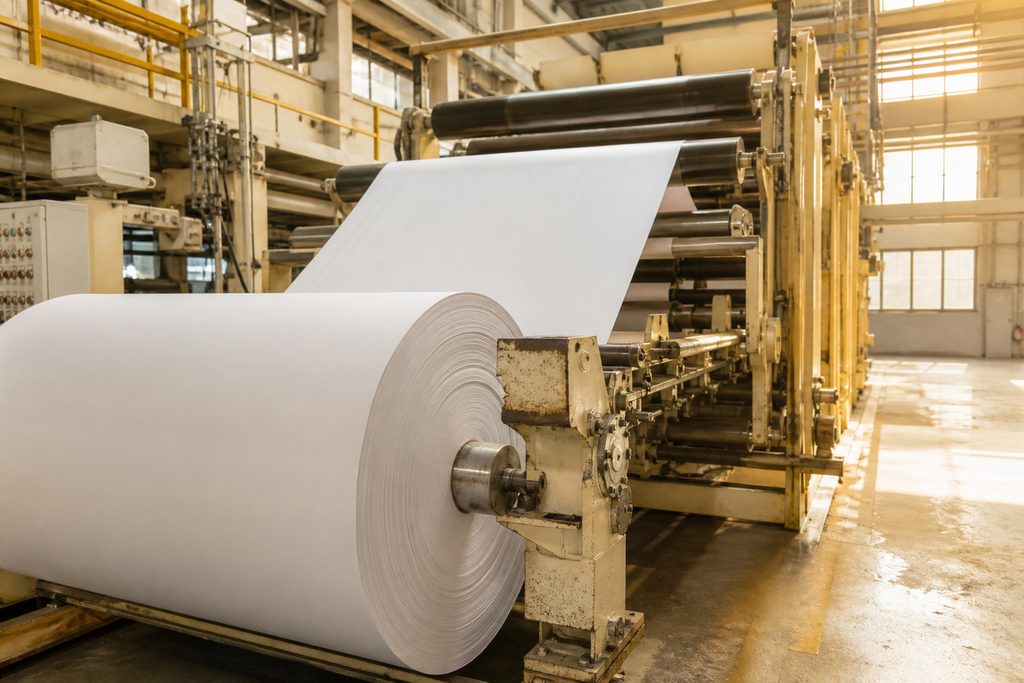
Frequent oil changes are often treated as a normal part of running heavy equipment in a harsh environment, however this doesn’t have to be the case. At a large gypsum board paper mill in South Africa, two pulper gearboxes were being drained and refilled every 500 operating hours because of water contamination. However, such short maintenance intervals can be a sign that the lubricant being used isn’t performing to the right standard.
Lubrication Engineers (LE) South Africa recommended a different lubricant for the mill, and the drain intervals have since extended to 10,000 hours on one gearbox and 6,500 hours on the other. That’s 20 times the previous interval on the first unit and 13 times on the second.
Harsh operating environment
The mill uses two Black Clawson #62 Hydro Pulpers with different workloads. Unit 1 is a liner pulper that runs about three days a week. Unit 2 is a filler pulper that runs 24 hours a day, seven days a week.
Both operate in a dusty, moist environment, which was causing problems with the gearbox oil. The mill was previously using a commercial grade gear oil and experiencing water and oil emulsification.
“On the unit running continuously, the oil needed to be changed roughly every three weeks,” says Sam Kekana, Technical Sales Representative at LE, who worked with the maintenance teams at the mill to find a solution. “The team was repeatedly draining oil, disposing of it and putting fresh oil back in.”
LE wanted to establish whether a different lubricant could give the mill a longer service interval, with oil analysis used to check the condition of the oil.
Duolec® 1605
The product selected was Duolec® industrial gear oil 1605, which is designed for gear and bearing applications that need a thermally stable, extreme-pressure lubricant.
It contains LE’s Duolec® additive, which helps increase film strength and protect metal surfaces under load and at higher temperatures. It is also very tacky, which helps the oil adhere to metal surfaces during operation.
Kekana says the starting point with any gearbox is to check that the product meets its requirements. “We need to know the required viscosity, operating conditions and what the equipment manufacturer specifies.”
Oil analysis
Oil analysis was an important part of the problem-solving process at the mill. Using LE’s LEAP℠ oil analysis approach, the oil was monitored to determine whether it was still suitable for use. Kekana says this monitoring is essential: “You cannot just look at oil in a gearbox and decide that it is good for another few thousand hours.” Oil analysis checks water contamination, viscosity, wear indicators and the overall condition of the oil, and the results give the maintenance team a basis for its decisions.
Dealing with contamination
Fewer scheduled changes mean less planned maintenance work on these units, less time spent on draining, refilling and disposal, and less used oil to dispose of. All of which will ultimately have a positive impact on cost savings.
However, Kekana says that even if the lubricant is changed, machine operators still need to deal with the source of the moisture. Seals, breathers, filling practices and exposure to moisture all need to be checked. “There is little value in putting effort into selecting the right oil while leaving an avoidable contamination problem unattended,” he says.
Each site needs its own assessment and tailored solution depending on what the source issue and the operating conditions are. With a new client, LE would check the equipment requirements, current oil, contamination levels and maintenance history, then agree on a sampling programme and review the drain interval as the results come in.
“If you are changing gearbox oil frequently, ask why,” says Kekana. “There may be a contamination issue that needs fixing, an opportunity to improve the lubricant selection or a drain interval that needs reviewing through oil analysis.”