The 50th anniversary this month of the June 16 student uprising is a reminder for engineering professionals to reach out and help create opportunities for aspiring youth.
SRK Consulting senior geotechnical engineer Confidence Tshilande highlighted the sacrifices made by previous generations in the struggle for educational equality – and how this opened doors for today’s youth. In addition to her consulting work on civil and geotechnical engineering projects, Tshilande dedicates significant time to mentoring school learners, university students, and young people entering the engineering profession.
Growing up in a rural village in Limpopo, she witnessed first-hand the transformative impact that infrastructure can have on communities. Improvements in roads, water services and other public infrastructure inspired her to pursue a career in engineering.
Livelihoods from infrastructure
“I could see that people’s livelihoods were directly connected to the quality of infrastructure around them,” she explains. “I wanted to be part of developing our country and contributing to infrastructure improvements that can make a real difference in people’s lives.”
Among the important lessons she has learned during her career is the value of collaboration and mentorship.
“At SRK, I have had the opportunity to learn from highly experienced professionals across different disciplines and even different countries,” she said. “Being able to draw on that experience helps us deliver better solutions for clients while also developing as professionals.”
She noted that engineering is becoming increasingly multidisciplinary, making knowledge sharing and mentorship more important than ever.
“Every project brings different challenges, and no two situations are exactly the same,” she said. “That means we need to keep learning, researching and sharing knowledge with one another.”
Power of mentoring
Having benefited from mentorship herself, Tshilande has made supporting young people a personal priority. She participates in formal mentoring initiatives, as well as informal engagements to help youth consider career opportunities. She has also founded Prestiio, a digital networking platform that connects women and young people with mentors, professional networks and support communities.
“One conversation can change a person’s future,” she said. “I know this because somebody once took the time to speak to me about engineering when I was a learner – which helped me see possibilities that I had never considered.”
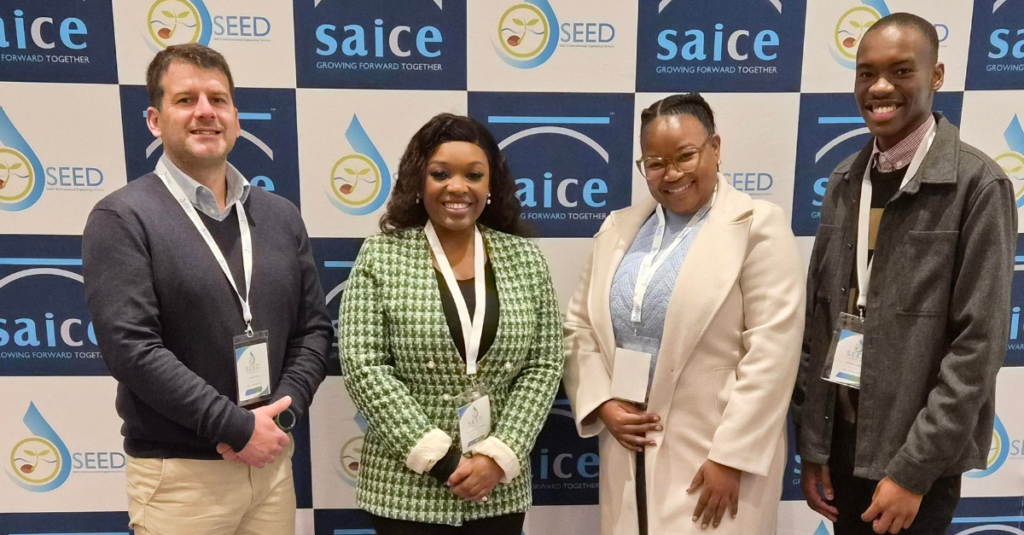
Tshilande noted that professional bodies are vital to nurturing future engineering talent. She is part of the South African Institution of Civil Engineering’s Environmental Engineering Division (SEED), for instance, and recently served as a technical reviewer for the SEED conference. Events like these create opportunities for experienced professionals, researchers, academics and young engineers to exchange ideas and build valuable networks, she said.
Professional exposure
“These forums are empowering in the way that they bring a diversity of experience together,” she explained. “They allow young professionals to learn from established practitioners, gain exposure to new ideas and understand the broader impact that engineering can have on society.”
Such engagements should even go beyond technical discussions and contribute to policy development, professional standards and improved education outcomes.
“We need to ensure that the knowledge being shared in these forums ultimately finds its way into practice, into standards, into policy and into the education of future engineers,” she said.
Looking ahead, Tshilande believes the engineering sector can do more to support transformation and inclusion, particularly by making mentorship a more everyday activity rather than something confined to formal programmes.
“I think we sometimes underestimate the impact of small interactions,” she said. “If you are an engineer and you meet a young person who is interested in the profession, take the time to speak to them. Share your experiences. Answer their questions. Help them understand the opportunities that are available.”