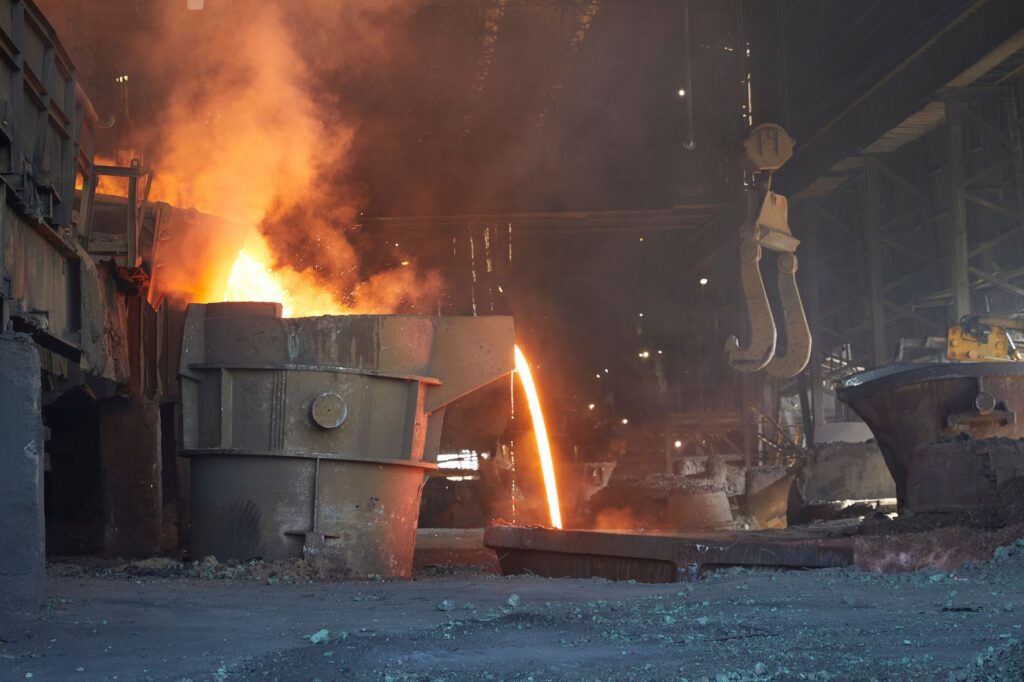
South Africa’s last remaining manganese smelter, Transalloys, has fully stopped ferroalloys production on 1 July, with no indication of when operations may resume. Chief executive Konstantin Sadovnik said the company had no option but to shut down its furnaces after years of mounting financial losses while negotiations over electricity tariffs with Eskom and government continue.
The suspension of smelting places around 600 permanent well-paid jobs and an estimated 7,000 downstream livelihoods at risk as the company prepares to mothball the plant -Section 189 consultations and a collective Retrenchment agreement have already been concluded.
“It has been a tough uphill battle,” Sadovnik said. “Our business has been losing substantial amounts of money for the past three and a half years. We have done everything possible to reduce costs, conserve cash, raise awareness and engage government, Eskom and the regulators to find and implement a sustainable electricity tariff solution. “Now, effectively, our destiny is in the hands of Eskom, NERSA and DEE – they are to determine whether Transalloys lives or dies. Further procrastination will amount to a death sentence.”
Sadovnik warned that unless a sustainable solution is agreed by 31 July and implemented with urgency thereafter, the company is unlikely to survive winter. “It would trigger the irreversible collapse of the business, devastate jobs in eMalahleni and permanently erase South Africa’s manganese beneficiation industry together with decades of specialised skills and expertise,” he said. “It would also wipe out an investment currently valued at around R6 billion.”
He called on government, Eskom, its management and board to intervene before the current suspension becomes permanent. ‘Decision to mothball and retrench is not going to be taken lightly. We’ll stand for another round – in good faith, and in the expectation that the ongoing negotiations with Eskom can still result in a timely and sustainable solution, we have obtained a board mandate to withhold the issuing of retrenchment notices until 31 July.’
“This is about far more than a reduced electricity tariff,” Sadovnik said. “It is a defining moment for South Africa’s industrial policy and whether value added manufacturing still has a future in this country.”
The shutdown follows Transalloys’ hardship notice to Eskom and Nersa in December 2025. Since then, the ferrochrome industry has secured reduced electricity tariffs following negotiations with Eskom and has been granted intermediary reduced tariffs solutions, or retroactive tariff effects.
“We are pleased that our colleagues in the ferrochrome sector have reached a solution and can now focus on rebuilding their businesses,” Sadovnik said. “What we do not understand is why that same blueprint cannot now be extended to the remaining non-ferrochrome smelters, namely manganese and ferrosilicon, representing only 11% of the ferroalloys sector in terms of power consumption There are only three of those smelters left outside of the scope of the solution, all of them a lot more energy intensive than ferrochrome smelters and financially distressed. We intentionally waited for the ferrochrome negotiations to conclude before seeking the same solution. Now that the framework exists, it is difficult to understand why the rest of the sector continues to face lengthy negotiations with no certainty or timeline.”