When industrial operations evaluate lubricant costs, the focus often falls on the price per drum, cartridge or container. Yet this purchase price represents only a fraction of what lubrication ultimately costs a business. The far bigger financial impact lies in how well a lubricant protects equipment, how long it lasts in service and the role it plays in preventing costly breakdowns.
Llewellyn Owen, New Business Development (Coastal) at Lubrication Engineers (LE) South Africa, says organisations often underestimate the true cost of lubrication because they assess products based on upfront price rather than total cost of ownership.
“Lubrication is one of those things that only gets attention when something breaks,” he says. “By that point, the damage has already been done, and the cost of fixing it is almost always higher than the cost of preventing it would have been.”
What poor lubrication actually costs
The direct costs of a lubrication-related failure are easy to quantify: a damaged component needs to be replaced, contractors may need to be called in and production is lost while the equipment is down. But Owen says the full picture is more complex than that.
“There are four main cost areas,” he explains. “You have the breakdown itself and the cost of replacing the damaged machinery. You have labour costs (often contractor rates) for unplanned stoppages. You have spare parts procurement, which is rarely straightforward when you’re dealing with an emergency. And then you have lost production, including any product that’s damaged in the process. When you add all of that up, the cost of a single avoidable breakdown is much higher than what a better lubricant would have cost.”
Beyond these, there is also the long-term effect of poor lubrication on equipment lifespan. Machinery that is consistently under-lubricated, over-lubricated or lubricated with the wrong product experiences accelerated wear. This shortens the serviceable life of components and means they have to be replaced more often, which is a cost that is easy to miss because it adds up over time rather in a single event.
Cheaper lubricants
One of the most common forms of lubrication related cost cutting is opting for a cheaper lubricant in place of a high-quality product.
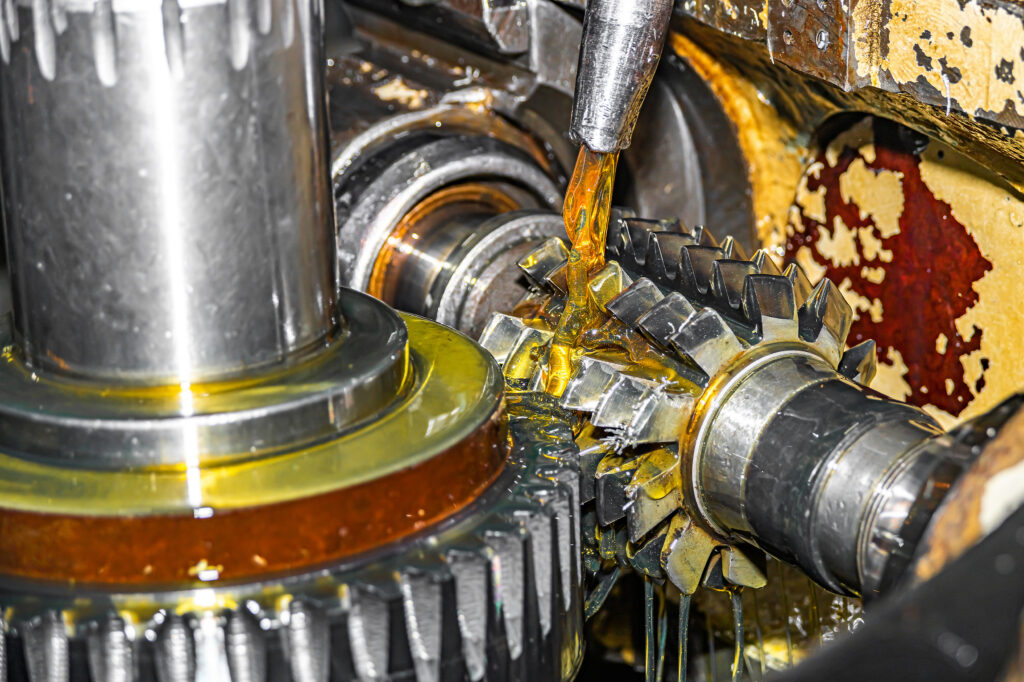
Owen says that although people often wonder what difference it could really make, it’s about what the cheaper product cannot do. “Lower-quality lubricants don’t have the film strength to handle heavy loads, wash out in moisture, or degrade quickly in high temperatures,” he says. “The result is that they get replaced more frequently, allow more wear on the components they are meant to protect, and ultimately cost more in total.”
High-quality lubricants, however, are formulated to last longer, maintain their protective properties in harsh conditions and require less frequent application. LE’s https://lubricationengineers.co.za/lubricants/industrial-greases/almagard-vari-purpose-lubricant-3752-3750/ for example, is specifically designed not to wash off, pound out or degrade under heavy use, meaning less product is needed over time and the components it protects last longer.
There is also an important environmental impact aspect in this. Lubricants that fling off machinery components or break down quickly can affect site contamination and increase the amount of waste product that needs to be managed. Better quality lubricants that stay in place and last longer reduce this environmental impact, which is an important consideration for industrial operations.
Shifting perspective
Owen says that in his experience the conversation around lubrication costs needs to shift from price per unit to total cost of ownership. A lubricant that costs more per container but lasts twice as long, protects components more effectively and reduces unplanned downtime is not an expensive option, it is the more economical one.
“The plants that get this right treat lubrication as an investment in their equipment, not a consumable where they can make savings,” says Owen. “The ones that treat it as a cost to be cut are the ones that end up spending far more when things go wrong.”
For industrial operations looking to review their lubrication practices, Owen recommends starting with a full assessment of what is currently being used, how it is being stored and how it is being applied, before looking at what products could suit the conditions on site better. In most cases, he says, there are some small changes that can make a big difference.