West Africa’s mining boom has seen many projects being developed in environmentally or socially sensitive areas, highlighting the importance of responsible mining with closure in mind, according to SRK Consulting.
“There has been an influx of investment into gold mining in West Africa,” said Ivan Doku, SRK Consulting country manager for Ghana and also a partner and principal geologist at SRK Consulting South Africa (SA). “However, while the industry focuses efforts on mining efficiently, it also needs to plan for the implications of a downturn – considering the cyclical reality.”
This means implementing the best technical practice, said Doku, to optimise a mine’s efficiency so that it can remains cash-positive during a downturn – and survive these difficult times. Where the downward cycle is deep and drawn out, however, many mines may not be viable and must responsibly follow a route to downscaling or closure.
Roanne Sutcliffe, principal environmental engineer at SRK Consulting (South Africa), noted that the region’s mines support entire communities, directly and indirectly, so there are severe consequences when operations have closed, wound down or downsized. Mining projects are finite, and the negative socio-economic impact on entire communities can include the collapse of social services and infrastructure, as well as environmental degradation.
“Mining companies in West Africa are starting to understand the importance of developing strong socio-economic systems to fulfil their responsibility to host communities beyond the life of mine,” she said.
Doku added that by working closely with communities, mines would be able to better plan post-closure land use.
Gold price fuels prospecting
Doku said the strong gold price meant that many shelved gold exploration projects in Ghana, the Republic of Côte d’Ivoire, Guinea and Nigeria had now been re-started, fuelling widespread prospecting operations in West Africa.
“Many majors are negotiating the repurchase and re-initiation of gold exploration projects that they sold four to five years ago when the gold price was low,” he said, adding that many greenfield mining projects had also entered into production this year.
At the same time, it has become feasible for several mines to pursue transitioning to underground operations, to reach deeper, higher-grade deposits as their near-surface ore is depleted.
“A mine in Nigeria, for example, recently announced plans to access deeper deposits, citing the current gold price as a motivation,” he said.
Alongside activity in the gold sector, high-grade iron-ore deposits in Guinea and nickel laterite deposits in the Republic of Côte d’Ivoire are also attracting investment.
Whether mining is on surface or underground, closing these operations is just as complex, he explained. It could include long-term gas and water hazard monitoring, the potential for rock instability and surface subsidence after backfilling, and persistent subterranean risk for many years after operations cease.
Responsibility extends beyond the fence
Wouter Jordaan, partner and principal environmental scientist of SRK Consulting (South Africa), said that the mining boom in West Africa has brought a heightened focus on responsible mining, which looks beyond operations.
“This responsibility includes helping governments address the complex socio-economic challenges facing local communities,” said Jordaan. “Mines are also looking for ways to help control and manage artisanal mining on their properties – to prevent environmental degradation, such as deforestation and contamination of water bodies.”
He added that mineral traceability throughout the mining supply chain was also becoming increasingly important. Purchasers of commodities today want to verify the origin, geographical path, chain of custody and processing methods of minerals that they procure.
“In response, mines’ financial and social development reporting will have to become more transparent,” he said. “Shareholders want to know how mining companies are mitigating their potential exposure to liability.”
Sutcliffe added that West African governments were also striving to increase local economic participation in mining, bringing another dimension to mining in the region.
“To create further economic value from mining, governments of host countries want to see greater localisation across the entire mining value chain – and not only in midstream operations where most of the focus has been thus far,” added Sutcliffe.
Practical solutions
She said that the momentum of mining activity in the region had opened up discourse on what exactly responsible mining entailed in a practical setting.
“The fact that the industry is beginning to talk about longstanding challenges – and is trying to find workable solutions to them – is a step in the right direction,” she said.
There is more focus on how mines effectively implement guidelines and standards to best effect, as opposed to following a box ticking exercise to ensure compliance, she said. This emphasis included the way in which mines conducted the closure of their operations when they were no longer economical to mine.
“When mines are approaching the end of their lives and companies are ready to step away, the question they should be asking is this: who is going to occupy this space that once sustained entire communities and managed the environmental impact of operations for decades or even centuries?” she said.
She said that mines had to start planning for closure from the time that the first fleet headed into a pit or underground, considering the immense financial costs and hidden liabilities associated with closing a mine responsibly.
“Mines need to remember that, at the point of closure, they will no longer be generating any revenue to cover the costs of remediation measures,” said Sutcliffe. There may also be risks that are only identified after closure, which could take centuries – and significant cost – to mitigate.
“Futureproofing of their operations has not always been a key driver for mining companies,” she said. “However, they are coming to terms with the extensive planning involved in closing a mine in a responsible manner.”
Sutcliffe said that dealing with potential closure problems proactively as part of day-to-day operations makes closure easier to manage. She also emphasised the importance of integrating mining, environmental and community teams early on, so that they worked cohesively to limit risk before closure.
She added that networks in government, communities and other important stakeholders, such as non-governmental organisations, had to be maintained as they would constantly change over the life of mine.
“To achieve closure objectives, closure planning requires widespread engagement with multiple stakeholders, including communities and government,” she said.
Jordaan stressed the importance of ongoing monitoring and an up-to-date understanding of potential future risks and liabilities. Groundwater contamination, for instance, can be an expensive, challenging and onerous problem to address.
“Contamination of groundwater can persist for many years,” he said. “By keeping monitoring networks and modelling up to date, problems can be addressed timeously before they become much larger issues over time.”
Planning for mine closure
Sutcliffe added that initiatives and standards such as the Global Industry Standard on Tailings Management (GISTM) also encouraged mines to start planning for closure.
“These standards include environmental, social and governance (ESG) principles, and underpin good mining practice,” she said. “The GISTM takes into consideration risk factors such as higher rainfalls due to climate change – which could increase the risk of tailings dam failure.”
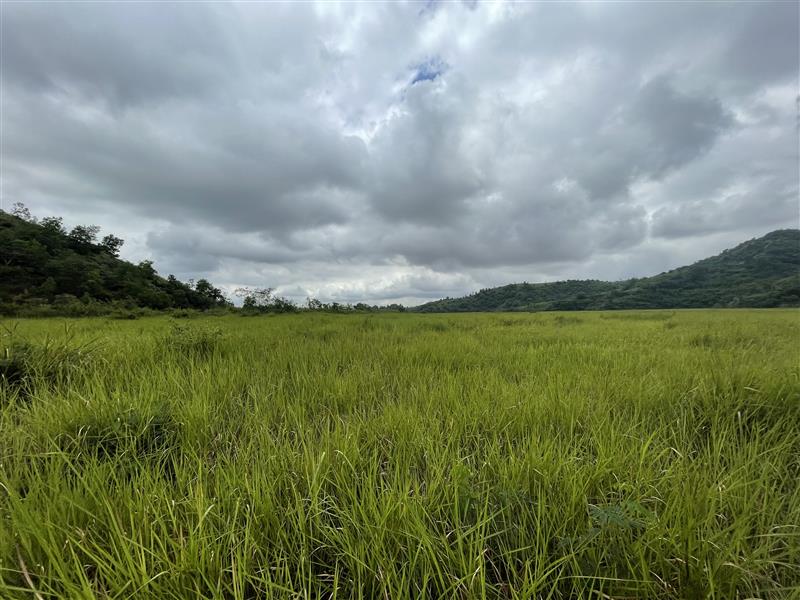
Sutcliffe added that designs for resilient post-closure land use needed to withstand extreme weather conditions in West Africa. Tropical rainforests in the region experience high annual rainfall of between 3 m to 4 m; at the same time, arid and semi-arid areas are prone to droughts and high temperatures.
“Mines have also started to realise the importance of integrating climate scenarios into their planning for post-mining land uses,” she said. “This is to ensure that they are climate-resilient for not only a 20- to 40-year horizon but for centuries.”
Jordaan said that there is already widespread degradation of waterbodies due to illegal mining,” and the need for a water stewardship approach is required.
Doku concluded by noting that regulators in host countries would also benefit from a stronger technical skills base, to effectively regulate responsible mining through to post-closure transition.
“The current mining boom has highlighted the extent of limitations of mining governance, which hinders policymaking around the regulation of mining at grassroots level,” he said.