On 4 March 2026, the global engineering community marks World Engineering Day for Sustainable Development (WED), a UNESCO-led initiative recognising the essential role engineers play in advancing a more sustainable world. This year’s theme, ‘Smart Engineering for a Sustainable Future Through Innovation and Digitalisation’, underscores the importance of resilient infrastructure, water security and digitally enabled collaboration. It is both recognition and responsibility, a reminder that engineering decisions made today shape long-term social and environmental outcomes.
At AECOM, this responsibility plays out across disciplines, from geotechnical investigations and dam engineering to mechanical systems design and digital coordination. Engineering’s influence is often most visible in its absence. As Kopano Maphutha, Candidate Geotechnical Engineer, observes: “I am motivated by how impactful my industry is, without being visible. The impact of engineering isn’t always obvious, but the lack of it is often felt by communities and society at large.”
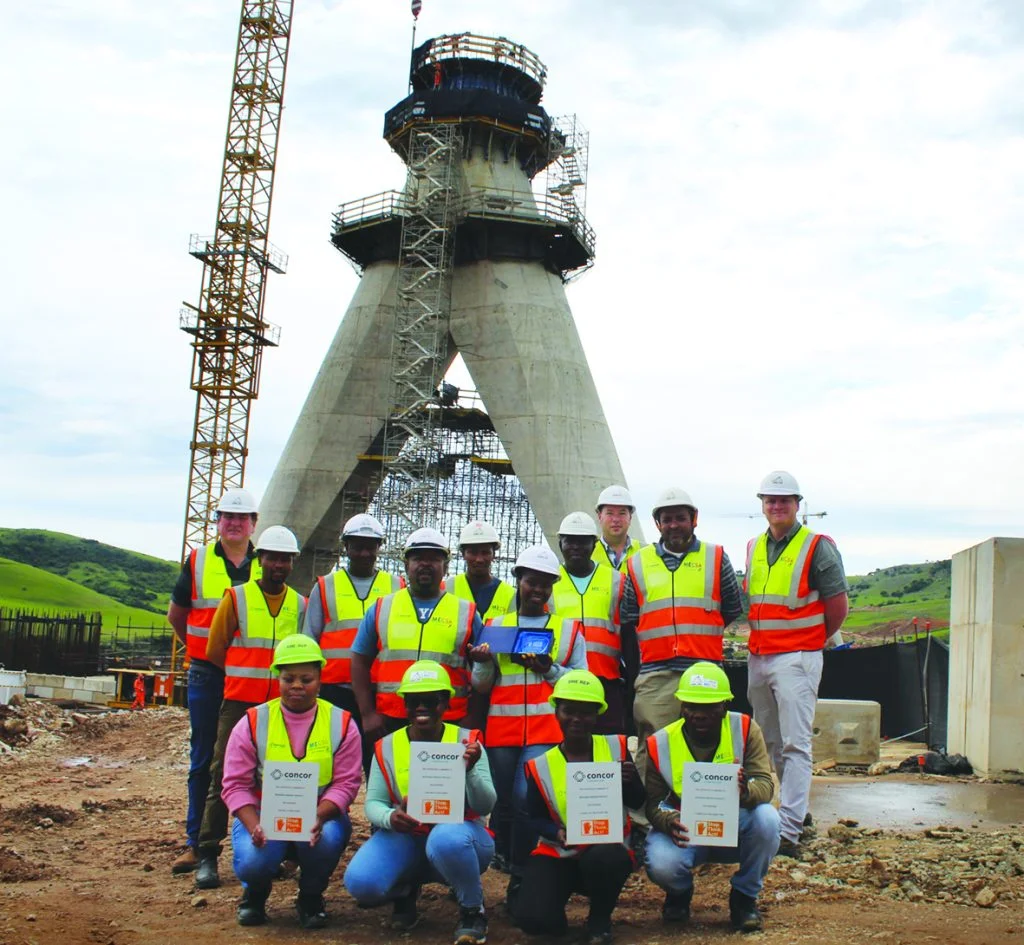
Her work on ground investigations, slope stability analyses and settlement assessments forms part of large-scale infrastructure development, including a major dam project in KwaZulu-Natal designed to supply water to millions. Such projects rely on coordinated technical input across specialisations. “These exposures highlight the importance of gathering information to produce informed designs,” she explains.
That collaborative dimension resonates across the organisation. For Nishaal Rana, Senior Mechanical Technologist, “collaboration with my team to problem solve and generate innovative solutions that make a difference to the overall success of a project” is central to engineering practice. His experience spans hospitals, commercial developments, data centres and metro stations locally and internationally, as well as the iconic stadium built for the 2010 FIFA World Cup in Durban. “This was a once in a lifetime opportunity to be a part of this project,” Nishaal recalls.
Water infrastructure remains particularly critical in strengthening long-term resilience. With more than 20 years in the sector, Mari Trümpelmann, Associate Director – Dams, has focused on dam safety evaluations, rehabilitation programmes and new dam developments that secure reliable supply for communities, agriculture and industry. “I am motivated by the many opportunities we have as engineers to contribute to tangible, impactful and innovative solutions that improves lives,” she says. “Knowing that my work supports water security, safety and sustainable development keeps me passionate about what I do.”
Across these projects, engineering extends beyond technical design to broader societal impact. Limited access to basic services can restrict economic participation and wellbeing, a reality that informs much of the infrastructure work undertaken in South Africa. “By working as an engineer, I believe I can contribute towards bridging the gap between the privileged and the less privileged,” notes Kopano.
Long-term thinking is embedded in project decision-making. As Mari explains, “As engineers, we focus on delivering projects that are resilient, sustainable and designed to uplift communities. The decisions we make today influence what future generations will inherit.” This approach aligns with AECOM Sustainable Legacies strategy, which integrates environmental, social and governance considerations across the asset lifecycle.
Digitalisation is increasingly enabling this integrated delivery. Platforms such as Bluebeam, ACC and SharePoint allow teams to collaborate with international stakeholders in real time, accelerating coordination while reducing travel. These tools strengthen multidisciplinary alignment, from early geotechnical investigations through to mechanical systems design and dam safety planning, supporting more efficient and informed outcomes.
Beyond project execution, attention is also placed on cultivating the next generation of engineers. “We educate the future generation by supporting engineers to grow both technically and professionally whilst having a work life balance,” says Nishaal. Initiatives such as the rebuilding and upscaling of rural schools further reflect how infrastructure development and social advancement intersect.
World Engineering Day offers a moment to recognise how profoundly engineers shape everyday life through the infrastructure that enables mobility, secures water and powers economic activity. It is also an opportunity to inspire new entrants into the profession, ensuring continued innovation in the face of climate, urbanisation and resource challenges. Aligned with this year’s theme, AECOM continues to integrate technical expertise, digital capability and responsible design to deliver infrastructure that supports communities today while strengthening resilience for tomorrow.