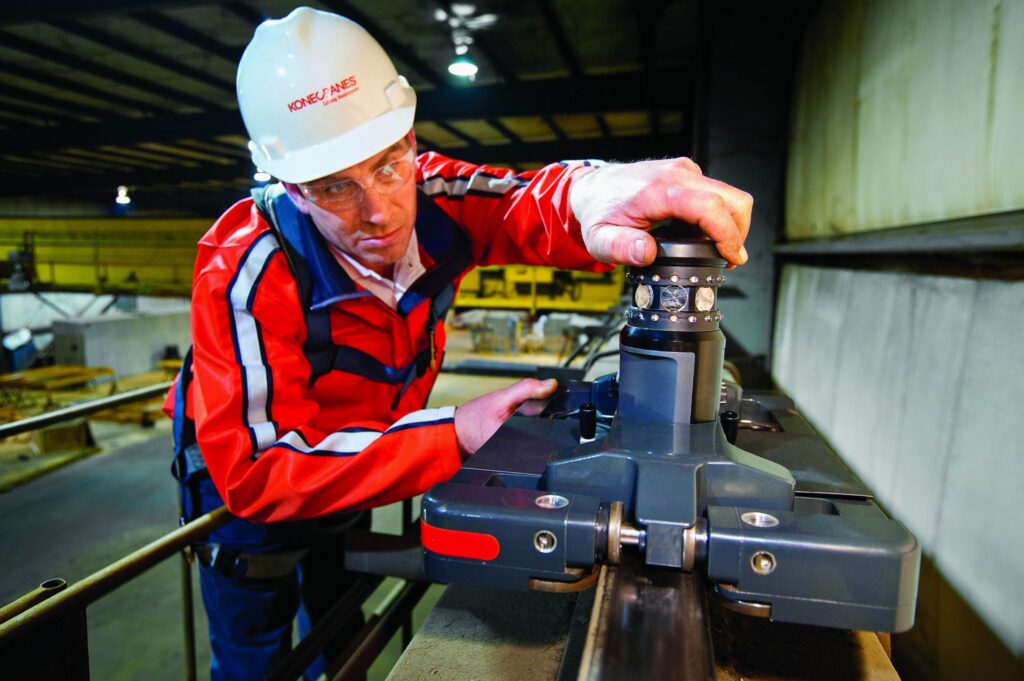
“Ensuring the sustained performance of capital equipment such as crane rails, ropes, hoist rails, gantry rails, and runway beams, which guide lifting equipment and support heavy loads, is essential for safety, reliability, and efficient operation. Undetected defects or deficiencies in load-bearing or safety-related components can lead to equipment failure” said Ian Grobler, Sales Manager for Konecranes South Africa. “When lifting equipment does not perform as it should or an increase in repair costs are noticed it is best to have the equipment inspected for fault lines in order to avoid further damage and potential safety breaches”.
Grobler added that Konecranes, through their Specialised Services offering, can conduct detailed evaluations to establish where the problem area is located. “When performance issues and malfunctioning of lifting equipment arises outside of normal maintenance and servicing cycles we need to conduct equipment assessments as soon as possible. This is where our specialised CraneQ Geometric Survey and RailQ Runway Survey play an important role in resolving technical fault lines quickly” commented Grobler.
CraneQ Crane Geometric Survey
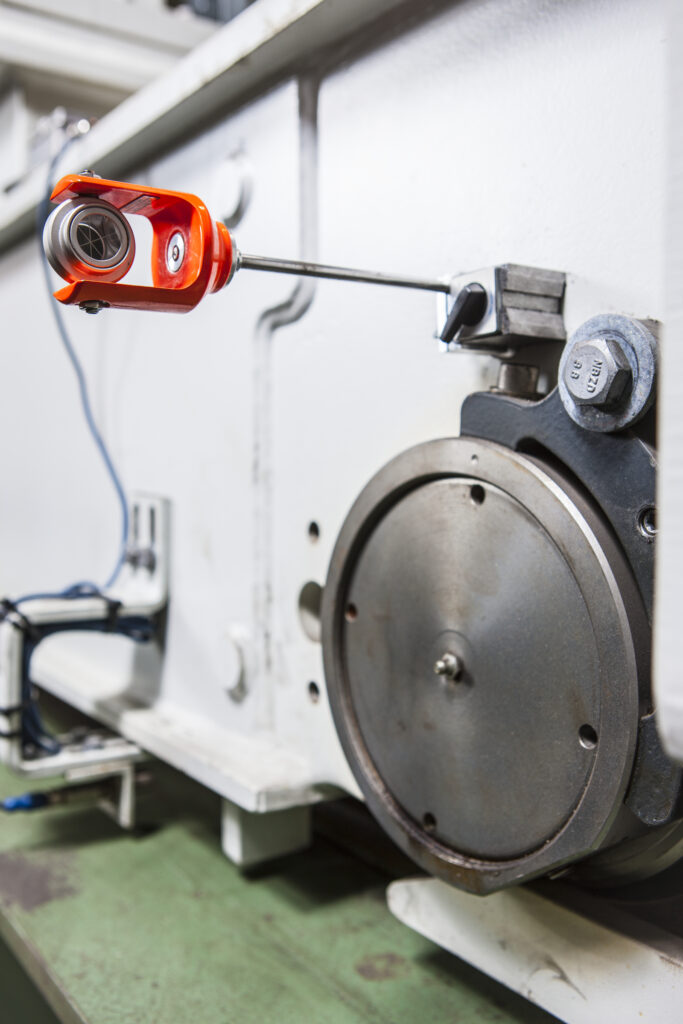
The CraneQ Crane Geometric Survey verifies the crane for squareness – meaning the end trucks must be parallel to each other and perpendicular to the bridge girder for the crane to track properly. The geometry of the end trucks is also verified as is the alignment of the wheels within the end trucks. The girders for the crane are measured for camber.
CraneQ is based on advanced and traditional measurement methods. Proprietary software and skilled survey technicians provide an extremely accurate geometric analysis of a crane. In addition to the survey results, the appropriate corrective actions are discussed with the customer.
Common problems of incorrect crane geometry include premature wheel wear, rail wear, structural component failures and drive faults. Complaints of ‘strange noises’ or incorrect positioning, is where the CraneQ Crane Geometric Survey can establish the cause of these issues to help avoid major problems and downtime.
Crane Reliability Study
Additionally, Konecranes Specialised Services can conduct a Crane Reliability Study which is an engineering assessment that studies the current condition of a crane and provides a theoretical estimate of its remaining design life. The survey establishes the serviceability of the crane components which gives an indication of maintenance issues that might arise and can be a tool to rectify any shortcomings at any level. It looks at structures, mechanical components and electrical systems and highlights possible maintenance and modernisation requirements.
The RailQ Runway Survey
Cranes should travel or track along their runway with a minimum of skew and without binding. Improper tracking leads to premature wheel and rail wear. If left to operate without corrective action, the crane will deliver an inefficient and sub optimal performance.
The RailQ Runway Survey can be performed on virtually any runway including those for overhead cranes, port cranes and yard cranes. The survey includes: Visual inspection of crane runway, measurement of the alignment of the crane runway, calculations based on measured data with specialised analysis and visualisation software with 3D and 2D runway rail visualisations whilst identifying straightness, span or elevation issues.
The benefits of RailQ Runway Survey are that it can deliver precise insights into runway condition and alignment. It is faster than traditional methods, saving time without compromising accuracy, and it offers clear, actionable reporting in easy to understand data which can be shared across electronic platforms. RailQ requires less time than a traditional survey and Konecranes specialist engineers provide accurate and in-depth information on the condition and alignment of the runway.
Grobler concluded “It makes financial sense to address issues that are affecting performance and causing operator alarm such as crane tracking and skewing issues, excessive wear on wheels and rails, loose rail fasteners, abnormal noises during bridge travel in addition to an increase in replacing bridge couplings, rail splices, rail sections and crane wheel axles, then we would suggest that our customers conduct the CraneQ or RailQ surveys to establish where the fault lies quickly. Both CraneQ and RailQ supply a full geometric analysis to the customer which is also available on the Konecranes portal. Konecranes will also discuss with the customer the planning of corrective options in order to get their lifting equipment back on track and performing as they should be”.