In high-risk industries such as agriculture, construction, forestry, fishing, and manufacturing, workplace safety remains a life-or-death concern. In South Africa, these sectors are responsible for more than 200,000 fatal injuries annually – an alarming 63% of all occupational fatalities1. Despite stringent policies, documented procedures, and the widespread use of personal protective equipment (PPE), incidents continue to claim lives. Why? Because compliance alone is not enough.
The consequences of workplace accidents often reverberate long after the initial event, affecting not only families and communities, but also the economy. Too often, health and safety training becomes little more than a box-ticking exercise, where posters are put up, toolbox talks are delivered in passing, and documents gather dust. What’s missing is connection – a human-centred approach that creates real engagement and leads to lasting behaviour change.
Leading with empathy, driven by women
MSHEQ Health and Safety Services is showcasing what it looks like when that missing connection is made. As a proudly female-led organisation, MSHEQ is setting new benchmarks in health and safety training by merging innovation with empathy, and compliance with creativity.
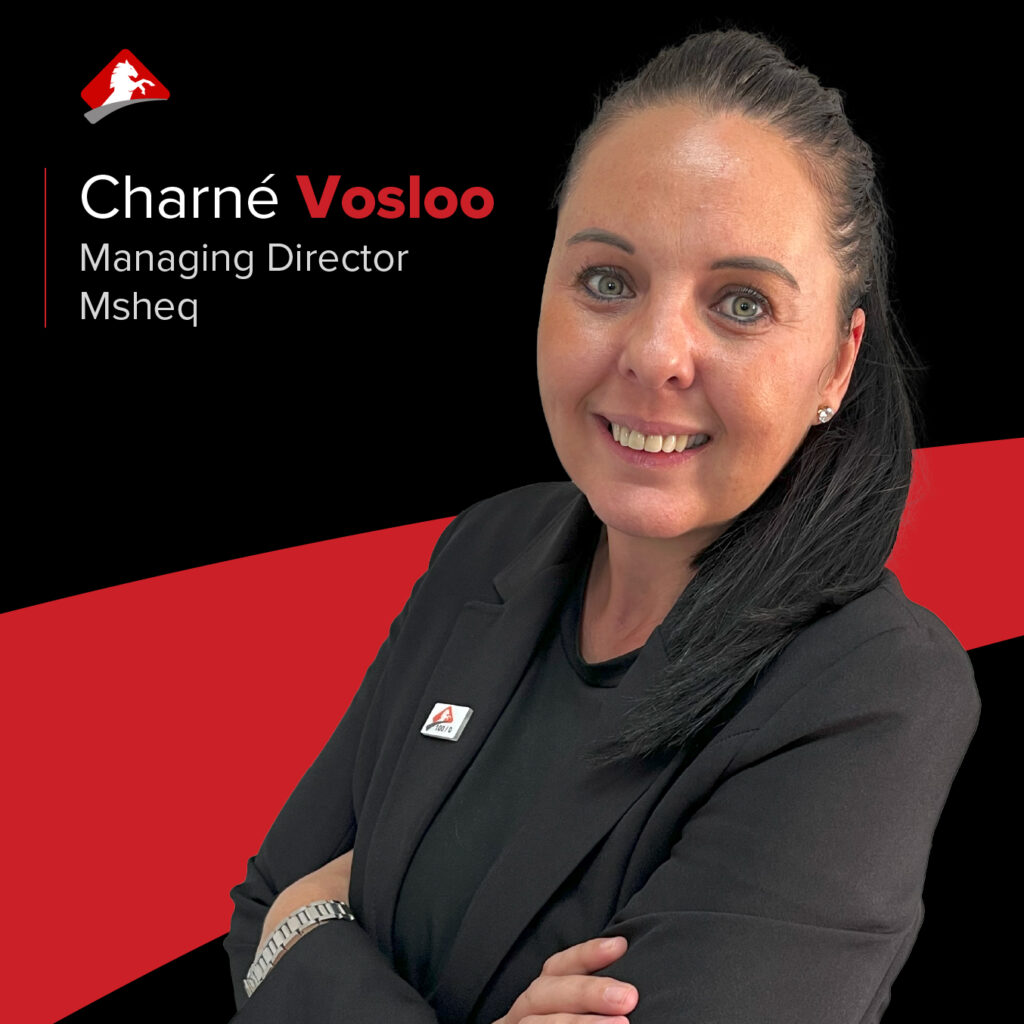
“Workplace safety shouldn’t happen to employees; it must happen with them,” explains Charné Vosloo, Managing Director of MSHEQ. “That shift starts with leadership, particularly leadership that prioritises emotional intelligence.”
As part of the Stallion Integrated Group, MSHEQ was the first in its field to incorporate virtual reality (VR) simulations into safety training. By immersing workers in high-risk scenarios, the technology enables better decision-making, improved knowledge retention, and deeper awareness. However, for Vosloo and her team, innovation didn’t stop there.
ISENZO: A new stage for safety
This month, MSHEQ has introduced its boldest training solution yet: ISENZO, a 45-minute industrial theatre production that brings real workplace incidents to life through raw, emotionally resonant storytelling.
“The name, derived from the Zulu word for ‘action,’ is no accident. We wanted to create a shared experience that workers would carry with them – something that goes beyond compliance and touches the heart,” explains Vosloo.
Scripted and produced in-house, ISENZO is performed by an all-female cast of professional actors and delivered in isiXhosa on-site at client premises. It’s an experience grounded in realism, blending humour, tension, and deeply human emotion to drive home the consequences of unsafe behaviour and the power of speaking up.
“By performing in the language in which people think and feel, we create a deeper understanding. They don’t just watch a story unfold, but see themselves in it,” adds Vosloo.
Beyond its impact on health and safety, ISENZO is also changing the narrative around women in traditionally male-dominated spaces, particularly the construction and security sectors, and even the arts.
“This is about empowerment on multiple levels,” continues Vosloo. “We’re not only changing how safety is taught, we’re giving women a leading role in driving that change. Whether it’s the team behind the production, the performers on stage, or the decision-makers in safety, women are front and centre.”
MSHEQ’s human-first approach supports a growing global trend: prioritising leading indicators like near misses, employee morale, and open communication, instead of relying solely on incident data. It’s a preventative model that puts people first, and one that’s proving far more effective in reducing risk.
From peer-led discussions and gamified learning to immersive theatre and virtual reality, MSHEQ is helping to shift the safety conversation from compliance to connection, making training more meaningful and memorable across industries.
“The real challenge in workplace safety isn’t a lack of rules, but a lack of resonance. When people feel seen, heard, and part of the solution, that’s when real change begins,” concludes Vosloo.